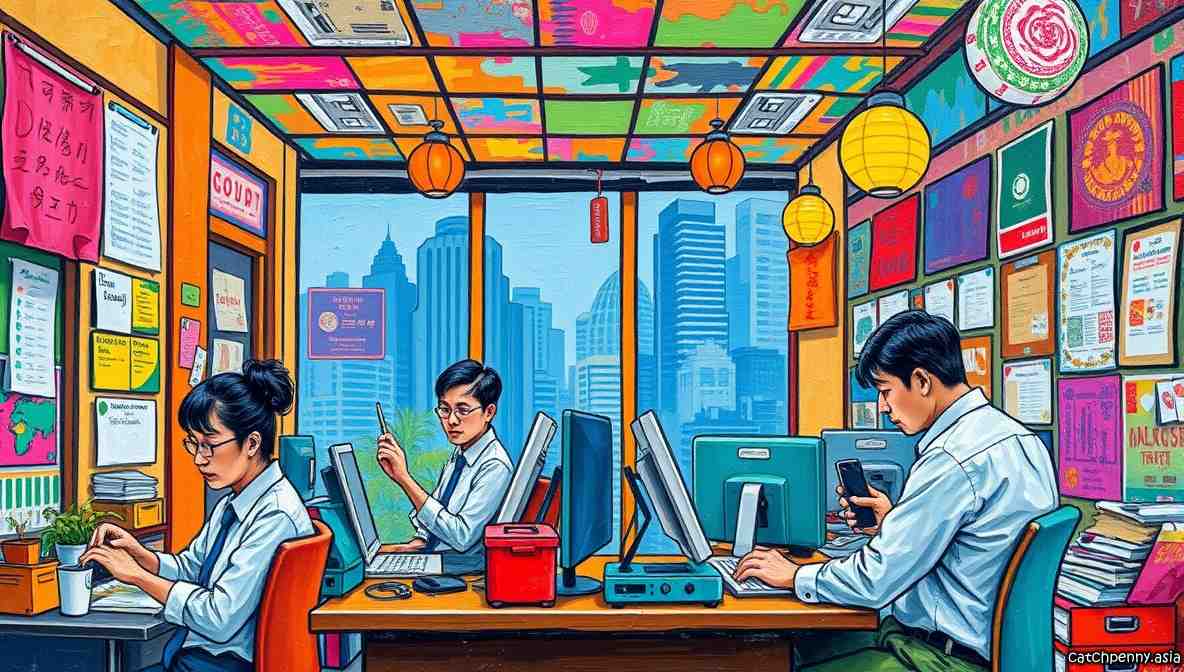
Study Finds That Working in the Same Place Without Knowing Each Other Creates the Same Thing as Knowing Each Other
Coworking Space Builds Unexpected Community Across Asian Creative Scenes
Continent Documents the Office That Wasn’t Designed as a Community and Became One
TAIPEI — Creative industry researchers published findings on creative coworking community culture, confirming that the shared creative workspace whose members work independently on their own projects in physical proximity has produced across Taiwan, South Korea, Japan, Singapore, Thailand, and Indonesia creative communities of genuine character whose formation was neither planned nor expected and whose social depth researchers found consistently surprising to the spaces’ operators and members alike.
The creative coworking community’s specific dynamic — independent workers who share space without shared projects — creates a social environment whose peer observation, informal knowledge exchange, and the specific solidarity of shared creative precarity produce community bonds that neither the home studio’s isolation nor the corporate office’s structure enables.
Taipei’s Independent Creative Hub
Taipei’s creative district coworking spaces whose members include illustrators, designers, writers, filmmakers, and musicians create creative community ecosystems of particular richness where the professional diversity produces the cross-disciplinary conversations that single-discipline communities cannot. “The collaboration I did not plan came from the person at the next table,” said one Taipei creative coworker. “The proximity produced the conversation. The conversation produced the project.” Community researchers at the OECD creative economy research document coworking spaces as producing significantly higher rates of creative collaboration than isolated working environments.
South Korea’s Indie Creator Community
Korean independent creator coworking spaces whose members share the specific experience of building individual creative careers in a cultural market that has historically favoured large production systems create communities of mutual support and knowledge sharing that the individual creative career’s isolation would otherwise prevent.
The Universal Shared Struggle Recognition
Across all six markets, researchers identified the shared struggle recognition as universal: the specific moment when two coworking space members whose work is entirely unrelated discover a professional challenge that is identical despite the different domains — the client who asks for unlimited revisions, the platform algorithm that changed without notice, the creative block before a deadline — whose shared experience creates community through the recognition that the creative precariat’s specific challenges are category-wide rather than individually produced. Documented through the American Psychological Association social connection research as coworking’s most reliable bond-forming event.