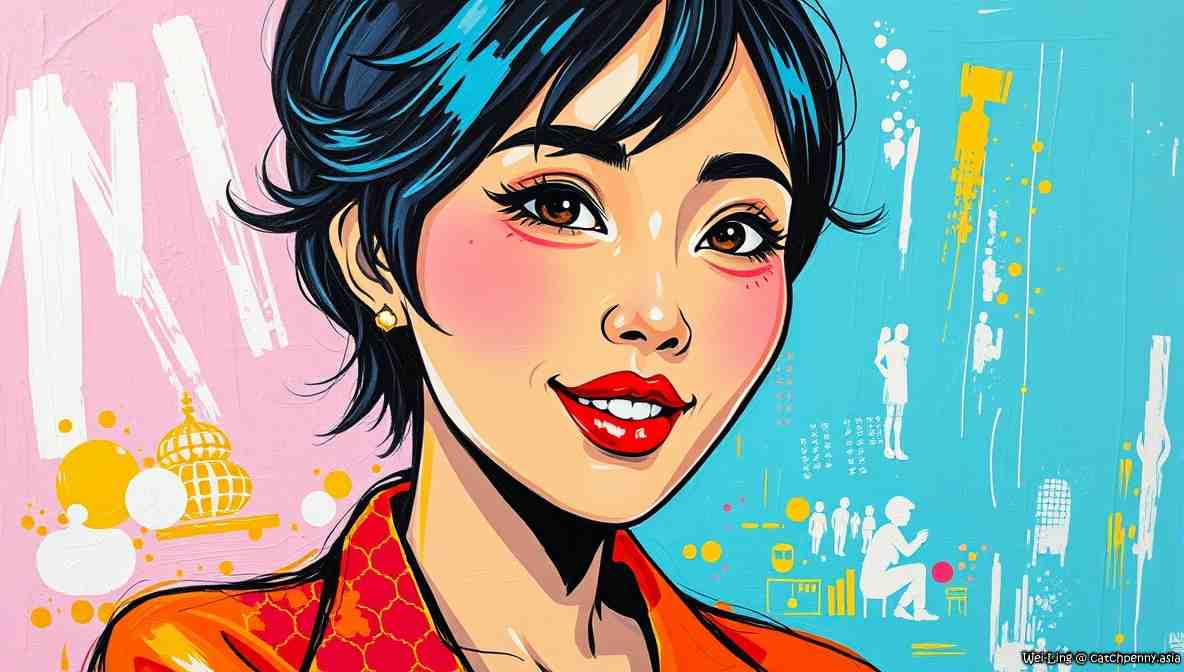
How China’s most cosmopolitan city became the center of its stand-up scene
Shanghai Satire runs through a genuinely different register than Beijing’s: less bound to state-media proximity, more shaped by the city’s commercial, cosmopolitan identity, and increasingly defined by a stand-up comedy boom that has made Shanghai China’s unofficial capital of the format.
Tuokou Xiu: China’s Stand-Up Explosion
Chinese-style stand-up, known as tuokou xiu, grew rapidly through the late 2010s and into the 2020s, with televised competition shows and packed club nights turning performers into genuine celebrities, and Shanghai specifically became the format’s commercial and creative center, hosting more clubs and open-mic nights than any other Chinese city.
Workplace and Consumer Comedy as the Safe Center
Shanghai’s stand-up scene leans heavily on workplace frustration, dating culture, and consumer life, material that plays to the city’s identity as China’s financial and commercial hub, while staying comfortably clear of the political territory that draws closer scrutiny in the capital.
Shanghainese Dialect as Its Own Comic Register
Beyond Mandarin-language stand-up, Shanghai maintains its own dialect comedy tradition, with performers using Shanghainese specifically to signal local identity and, occasionally, gentle generational commentary on how quickly the city’s own culture has changed alongside its skyline.
A More Commercially Driven Comedy Economy
Shanghai’s entertainment industry operates with a more explicitly commercial, advertiser-friendly orientation than Beijing’s state-media-adjacent scene, which shapes content choices directly: bits need to work for a paying club audience and, increasingly, a livestreamed one, rather than surviving a state broadcaster’s editorial review first.
Celebrity Comedians and the Competition Show Boom
Televised stand-up competition formats have turned a handful of Shanghai-based performers into genuine national celebrities, with breakout stars from these shows going on to headline club tours and streaming specials that reach far beyond the city’s own comedy scene.
A City Built for International Comparison
Shanghai’s history as a treaty port and its continued role as China’s most internationally connected city give local comedy a natural comparative streak, with performers frequently working Western pop-culture references and expat-adjacent material into sets in ways that would land differently in more insular markets.
Livestreaming as the Format’s New Frontier
Beyond traditional club shows, Shanghai’s comedy scene has moved aggressively into livestreamed content, with performers building direct audiences on platforms that let them route around some of the gatekeeping that traditional broadcast and even club bookings still involve.
Why Political Material Still Stays Rare
Even with its more commercial, less state-media-adjacent orientation, Shanghai’s stand-up scene generally avoids direct political commentary, following the same national content boundaries documented on our China Satire page regardless of which specific city a performer calls home.
Comparing Shanghai’s Scene to Taiwan’s Openness
Despite sharing a language and considerable cultural overlap, Shanghai’s stand-up scene operates under content restrictions Taiwan’s comedy circuit simply doesn’t face, a genuinely useful comparison for understanding how much political geography, rather than language or cultural tradition, shapes what Chinese-language comedy is actually willing to attempt.
A Younger, More International Audience
Shanghai’s comedy clubs draw a noticeably younger, more internationally exposed audience than equivalent venues in most other Chinese cities, a demographic that press-freedom and culture researchers link directly to the city’s history as a major international business and finance hub.
What Comedy Tourists Should Know
Visitors interested in catching Shanghai’s stand-up scene should know that most club material runs in Mandarin, though a small but growing English-language circuit has developed around the city’s international business districts, catering to the same expat population that gives Shanghai comedy its distinctly cosmopolitan flavor.
Final Thought
Shanghai’s stand-up boom represents one of the more genuinely interesting developments in Chinese comedy over the past decade, a commercially driven format finding real success without ever needing to test the kind of political boundaries that would draw the state’s direct attention.
How the Boom Compares Internationally
International comedy industry observers have noted that China’s stand-up boom, with Shanghai at its center, developed on a genuinely compressed timeline compared with how the format grew in the US or UK, reaching televised mainstream success within roughly a decade of the genre’s real domestic emergence. That speed says something real about how much pent-up appetite existed for a genuinely new comedy format in the Chinese market.
One More Thought
Shanghai’s version of stand-up will likely keep looking different from its Western counterparts, shaped by its own audience expectations and its own content boundaries, rather than becoming a straightforward import of an American or British format. We’d rather report on that distinct evolution than assume it’s simply following someone else’s blueprint.
Closing Note
We’ll keep tracking how the city’s stand-up boom evolves as competition shows continue minting new celebrities and as livestreaming reshapes how audiences discover new performers.
See you at the next update.
Shanghai Satire on catchpenny.asia
Visit our China Satire page for the country’s broader internet parody culture, or our Beijing Satire page for how the capital’s scene compares.
Visit our China Satire page for the country’s broader internet parody culture, or our Beijing Satire page for how the capital’s scene compares.
Closing Note
We’ll keep tracking how the city’s stand-up boom evolves as competition shows continue minting new celebrities and as livestreaming reshapes how audiences discover new performers.
Take care, and thanks for reading.