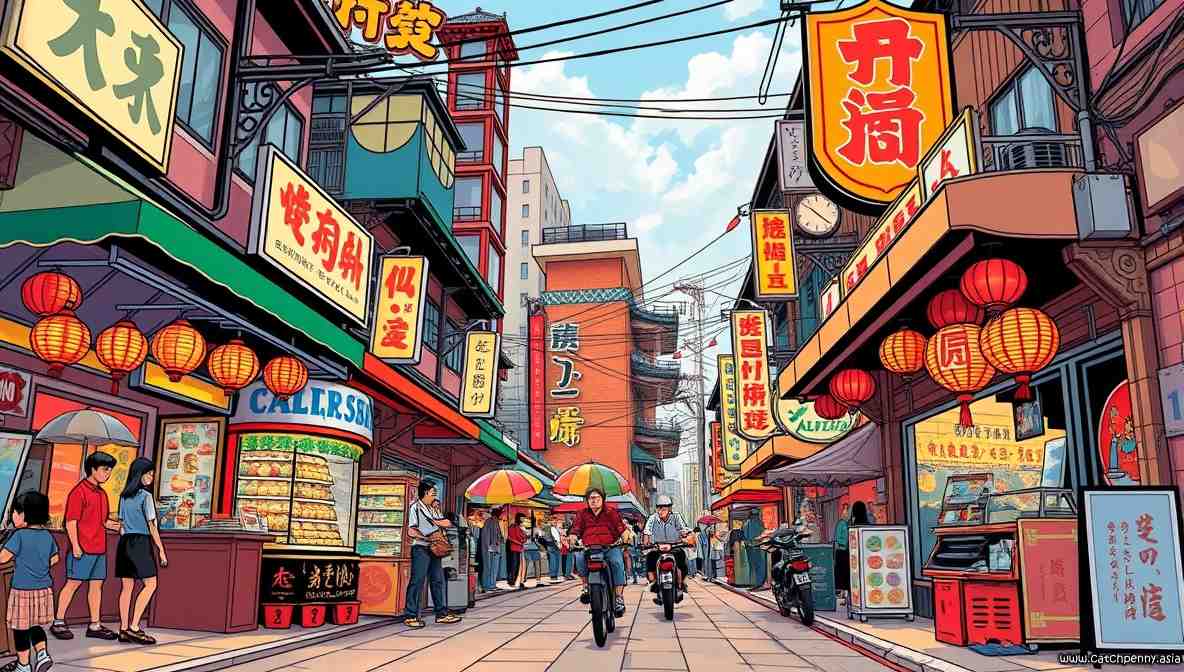
Why Japan’s satirical tradition runs through comedy formats rather than mock news
Japan Satire looks noticeably different from almost anywhere else in Asia, mostly because Japan never really developed the standalone mock-news website format that dominates satire in India or, in coded form, China. Instead, satirical instinct in Japan runs mainly through established comedy formats — manzai, rakugo, variety television — that have carried social and political commentary for centuries without ever needing a fake press release to do it.
Manzai: Comedy Built Like a Machine
Manzai is Japan’s dominant stand-up format: a fast-talking straight man, the tsukkomi, paired with a comic partner, the boke, working through a rigid structure of setups and punchlines that has held its basic shape for decades. It’s less improvisational than Western stand-up and more like a finely tuned engine, which makes it an unusually efficient vehicle for social commentary once a duo decides to point it at something specific — a bureaucratic absurdity, a corporate scandal, a public figure’s latest gaffe.
Rakugo: Satire With a Four-Hundred-Year Head Start
Rakugo, a seated solo storytelling form dating back to the Edo period, has used comic narrative to needle samurai pretension, priestly hypocrisy, and merchant-class vanity since long before Japan had anything resembling a modern press. Contemporary rakugo performers still draw on that tradition, occasionally updating centuries-old story structures with modern political or corporate targets, proof that a joke format doesn’t need updating nearly as often as its subjects do.
Why Japan Never Built Its Own Onion
Unlike India, which produced multiple standalone satirical news sites in quick succession, Japan has no single mock-news outlet with anything like the same national profile. Cultural norms favoring indirection and social harmony, combined with defamation law that has been used against public criticism in the past, have generally pushed sharper political commentary toward comedy formats and anonymous online spaces rather than a bylined satirical newspaper willing to print a fake headline about a sitting prime minister.
The Talent Agency Factor
Much of Japan’s professional comedy runs through a small number of powerful talent agencies, most notably Yoshimoto Kogyo, which manages a huge share of the country’s manzai duos and variety performers. That concentration shapes what gets said on mainstream television fairly directly: comedians whose careers depend on agency relationships and broadcaster goodwill tend to keep political material lighter than performers working independently online, where the professional stakes are different.
Online Spaces Fill the Gap
Political commentary that mainstream Japanese comedy tends to avoid finds more room on social platforms and anonymous forums, where pointed jokes about politicians and bureaucracy circulate without needing a broadcaster’s approval or an agency’s blessing. It’s a quieter, more fragmented version of what India’s satire sites or China’s Weibo accounts do more visibly — the humor exists, it’s just distributed rather than centralized under one recognizable outlet.
Manga and Parody Culture
Japan’s enormous dojinshi and parody-manga culture provides another outlet entirely, with amateur and semi-professional creators regularly reworking political and corporate figures into comic strips and illustrated satire that circulates through fan conventions and online marketplaces well outside traditional publishing. It’s not always overtly political, but when it is, it can be sharper than anything that would ever run in a mainstream newspaper.
Kyogen: The Original Political Comedy
Long before rakugo, kyogen theater was already mocking greedy landlords, incompetent servants, and pompous samurai as comic relief between the far more serious noh dramas it was originally paired with. It’s a reminder that Japan has been quietly running satire through respectable-looking classical art forms for the better part of a millennium, which makes the country’s modern reluctance to run a straightforward mock-news site feel almost like an aesthetic choice rather than a limitation.
Variety Television’s Political Detours
Japanese variety television, the country’s dominant broadcast format, occasionally ventures into political territory through panel discussion segments where comedians sit alongside journalists and commentators, softening pointed criticism with humor in a way a straight news panel couldn’t get away with. It’s a genuinely distinctive format: half current-affairs discussion, half comedy showcase, and it lets political commentary reach a mainstream audience that would never seek out a dedicated satire site in the first place.
Foreign Correspondents Notice the Gap First
International journalists based in Tokyo have long noted, sometimes with genuine confusion, that a country capable of producing manga, anime, and comedy formats this sophisticated has no domestic equivalent of The Onion, and the honest answer usually offered is that Japan simply built its satirical instincts into other formats rather than a satire-specific one. The joke exists; it just doesn’t come with a masthead. It’s a bit like discovering a country with a world-class film industry that has simply never gotten around to making a horror movie — not for lack of ability, just a different set of instincts. Nobody has quite explained why, and at this point asking feels a little like asking why sushi restaurants don’t serve dessert.
Japan Satire on catchpenny.asia
catchpenny.asia covers Japan with the same real-background-plus-satire approach used site-wide. Read our Japan Satirical Journalism companion for a closer look at press freedom and the country’s comedy industry, or visit the East Asia Satire hub for how Japan compares with its neighbors.