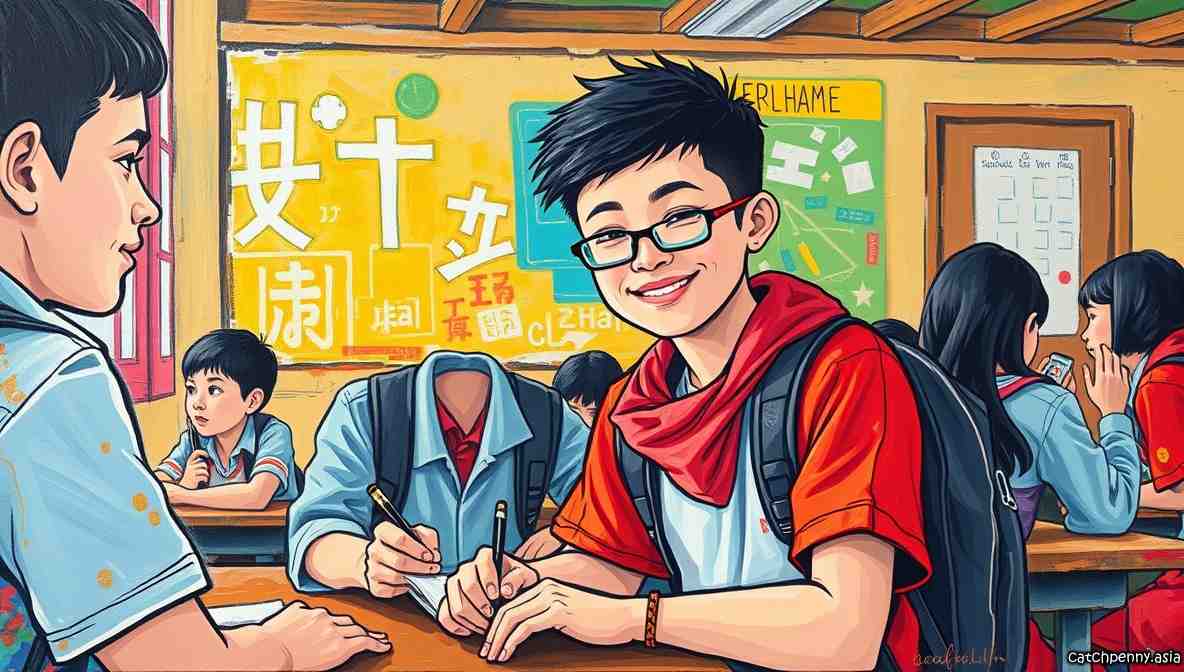
How Singapore’s Extraordinary Social Engineering Experiment Produced One of Asia’s Most Self-Aware and Distinctive Comedy Cultures
Bohiney Magazine | The London Prat
The Most Analyzed City in Asia Is Also Genuinely Funny
Singapore is, by most measures, the world’s most intensively managed society: a city-state whose government has, over six decades, shaped not just policy but public behavior, social norms, and — critics and admirers debate the precise degree — the cultural character of its citizens through a combination of economic incentives, legal enforcement, and public communication that has no real equivalent anywhere else in the world. In this context, Singaporean humor is itself a remarkable phenomenon: a comedy culture that is simultaneously deeply aware of the managed character of its social environment and genuinely, specifically funny about it — not despite the management but partly because of it, since an environment this deliberately constructed is also an environment full of the gap between official intention and human reality that is the engine of all comedy.
The concept most central to Singaporean humor is kiasu — a Hokkien term meaning literally afraid to lose that describes a specific Singaporean cultural orientation: the competitive anxiety about missing out, the reflexive drive to secure advantage, queue early, maximize every opportunity, and ensure that whatever resources are available do not end up with someone else rather than you. Kiasu has been embraced by Singaporeans as a self-descriptor with genuine affection, appearing in government campaigns, in the title of a popular comic book series, and in endless self-deprecating references in Singaporean comedy and social commentary. It is the kind of cultural self-knowledge that is possible only when a characteristic is so widely recognized and so thoroughly documented that denial is no longer available.
Singlish: The Language That Singapore Officially Dislikes and Actually Loves
Singlish — the English-based creole that incorporates Malay, Hokkien, Teochew, Cantonese, and Tamil influences and that is marked by distinctive grammatical structures, vocabulary, and the characteristic sentence-final particles lah, lor, sia, and can — is Singapore’s most important comedic medium and its most enduring cultural controversy. The Singapore government has maintained an official Speak Good English campaign for decades, explicitly discouraging Singlish as a degraded variety of English that disadvantages Singaporeans in international contexts. Singaporeans have responded by speaking Singlish with approximately the same enthusiasm as before the campaign, using it as a marker of local identity and communal belonging that Standard English cannot replace, and deploying it in comedy with particular relish.
The comedy of Singlish is inseparable from its social function as an in-group marker. When Singaporean comedians perform in Singlish, they are not just using a regional dialect; they are signaling membership in a specifically Singaporean community that shares this linguistic heritage across ethnic lines — Chinese, Malay, Indian, and Eurasian Singaporeans all speak Singlish, in ways that their respective ethnic community languages do not cross. The comedy is available to all of them simultaneously, creating a shared comedic space that is genuinely multicultural in a way that ethnically segregated humor cannot be. National University of Singapore linguists including Leimgruber and Wee have documented Singlish’s linguistic structure and social functions extensively, providing academic confirmation of what every Singaporean already knows from direct experience.
The Cultural Mediacorp Tradition and Local Comedy Production
Singapore’s public broadcaster Mediacorp has been the primary vehicle for local comedy production for decades, and its Chinese-language, English-language, Malay-language, and Tamil-language channels have each developed comedy programming traditions that reflect their respective audience communities while addressing shared Singaporean experiences. The long-running English-language comedy Phua Chu Kang Pte Ltd — which ran from 1997 to 2007 and remains one of the most culturally significant Singaporean television productions — deployed the kiasu contractor character Phua Chu Kang as a vehicle for social observation about HDB life, middle-class aspiration, and the specific textures of Singaporean domestic experience with considerable wit and warmth.
The show’s relationship with the government was characteristically Singaporean in its complexity: it was enormously popular, it was a genuine artistic achievement, and it periodically attracted official concern about its Singlish content — at one point the character was briefly sent to Speak Good English classes in the show’s narrative, in a meta-commentary on the official campaign against the very language the show was celebrating. The Straits Times covered Phua Chu Kang’s cultural impact extensively, noting that the show’s popularity demonstrated a public appetite for locally grounded comedy that reflected actual Singaporean life rather than the aspirationally international image that official cultural policy tended to project.
Political Satire in Singapore: The Narrowest Space
Singapore’s political satire tradition is, by the standards of any comparable democracy, severely constrained. The combination of defamation laws that have been applied against political critics with extraordinary effectiveness — resulting in judgments that have bankrupted opposition politicians and financially ruined journalists — and a media environment in which all broadcast media operates with strong awareness of the government’s sensitivities creates conditions in which direct political satire aimed at specific political figures is effectively unavailable in mainstream media. The contrast with countries at comparable levels of development and education is stark, and it is not lost on Singaporean audiences who access political satire through international streaming platforms and international comedy.
Online political satire has found somewhat more space, with platforms like The Middle Ground and The Online Citizen, before the latter’s license was revoked, providing commentary that was more critical than mainstream media. Reporters Without Borders consistently rates Singapore near the bottom of its Asian press freedom rankings, noting that the legal environment creates self-censorship that is far more comprehensive than the relatively small number of formal legal actions against journalists and commentators would suggest. The humor that does engage with Singaporean political life tends to address systemic features — the planning culture, the efficiency obsession, the managed character of public space — rather than specific political figures, using the kiasu lens to make the system itself funny rather than pursuing the individual target approach that legal risk makes too costly.
For more on Singaporean culture and media, visit The Poke and Private Eye.
SOURCE: https://bohiney.com